
By Charles J. Jefferson
The Wall
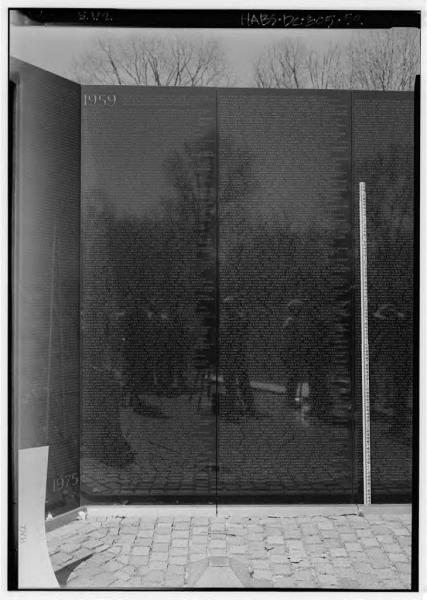
Editors note: To the Left, the Viet Nam Veterans Memorial serves as a testament to the sacrifice of American military personnel during one of this nations least popular war. Since its unveiling in 1982, the work has become a point of reference, inspiring a new generation of American memorials.
I had moved from Landing Zone (LZ) Uplift on the coast to Artillery Hill in Pleiku in the central highlands,
becoming assistant Communications Officer of the 52nd Artillery Group. As such, I naturally drew a number of extra duties. One was pay officer. This unfortunate individual must, after signing for the cash to pay the troops, get it into their hands toot sweet.
We had units in several out-of-the-way places, including Kontum and Ben Het, and getting to all of them within the deadline wasn’t so simple. As a non-divisional unit, we didn’t have ready access to helicopters. The alternative was to accompany a convoy. Since our unit in Ben Het was due for a resupply of fresh food, I was riding shotgun in a reefer (refrigerator truck) as we joined a 4th Infantry Division convoy en route to Kontum (about halfway to Ben Het).
About an hour out of Pleiku, the front end of the very long convoy was hit by rocket fire from across the valley. We could see the smoke and hear the return fire, and shortly saw the covering Cobras helicopter gunships zoom in to strike the ambush site. Eventually, the convoy commander decided to turn back. This didn’t suit me at all. I had two units to pay and a deadline to meet. I really had to go on. Plus, the stuff in the reefer would spoil if not delivered soon.
We joined up with a small Engineer element that had the gun jeep and radio required for independent movement on the roads. They planned to go on past Konturn to Dak To. At Dak To we and some other Ben Het-bound vehicles were able to arrange for a Vietnamese APC (armored personnel carrier) to go on with us. The Special Forces base at Ben Het was dug into an isolated hill in the middle of a plain, with mountains overlooking it from the Laotian side of the border.
As we neared the recently besieged base (where my predecessor had earned a Silver Star leading in a convoy), it looked like a World War I battle scene. There were a few scraggly tree stumps and the ground was covered in all directions with brass of every caliber and other detritus of battle. A brand-new Fat Albert (M-88 tank retriever) with a big hole in the side was in a roadside ditch. A small mountain of destroyed equipment was piled up next to the airstrip.
As I sought out our unit and started to pay the troops, the arriving vehicles were unloaded feverishly. Joined by a few others from the garrison, they started back toward Kontum immediately so as to get there before nightfall. Clearly, I was going to spend the night at Ben Het. Outlining my plans to join a convoy to Kontum the next day so I could pay the unit there and then return to Pleiku, I was told, Not so fast. Our unit in Kintum had two guns (175mm self-propelled howitzers) out on a hipshoot just off the road on the way back to Kontum. I would have to pay them there.
The next day, I rode shotgun on a gun truck (a heavily-sandbagged 2 1/2-ton truck with a 50 caliber machine gun and other weaponry in the bed). As the convoy neared the hip shoot (a brief artillery deployment to a field location, intended to surprise the enemy), the driver touched the brakes and I jumped out into the ditch along the road. I made my way over to the unit, discovering as I approached that they were in the process of closing down. With our two howitzers was a battery (four) of Vietnamese Army (ARVN)-towed 155mm howitzers and a company of ARVN rangers. With the Vietnamese troops were their families.
I paid the troops as the planned departure time came and went. We had major problems! It was already late afternoon. One of our guns couldn’t move under its own power, and then the ammo carrier towing it broke down. It became clear we weren’t going to get to Kontum before dark, when the roads closed. In fact, we weren’t even going to get to the next town with a garrison.
Eventually, we pulled off the road next to a small ARVN watchtower with an apron of wire around it. We strung up what concertina we had, as did the ARVN artillerists. The Rangers, however, decided to push on down the road. We learned later that one of their trucks hit a mine, resulting in many casualties.
It was quite a night! The lieutenants called in our position and plotted supporting fires in case we were attacked, but in truth we were essentially defenseless in the middle of a prime North Vietnamese Army operating area. Seemingly unconcerned, the Vietnamese lit a large bonfire, around which they sang and danced after dinner. As a Captain, I was the senior US officer present, though I had no mind to interfere with the two artillery lieutenants in running their unit. On top of that, I had $40,000 in MPC (Military Payment Currency) with me for which I was personally responsible. I don t think I’ve ever been more relieved to see daylight than I was the next morning. The rest of my road trip was a breeze, but by then I had already had all the adventure I wanted.

Set in the grassy park of Constitution Gardens, the Wall is neither prominent, grand, nor imposing. Rather, it is simple, thoughtful, and profound. It is a place to remember those who served during a turbulent time in American history.
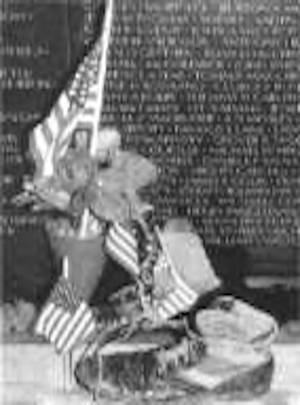
Every day, family and friends of those on the Wall, and the general public, visit the memorial. Often, they leave flowers and momentos to remember their loved ones. They leave letters to say thank-you, good-bye, Im sorry, and whatever else is in their heart. Some take pencil rubbings of the name of someone special.The Viet Nam Veterans Memorial Wall honors all who served, and in particular, those who were lost. The memorial puts a human face on what was Americas longest war.
Copyright Charles J. Jefferson, 1997
This story is a reprint from the May 1997 issue of The Legacy magazine. All rights reserved. No part of this story may be reprinted without the prior consent of U.S. Legacies or the original author.
- Log in to post comments