
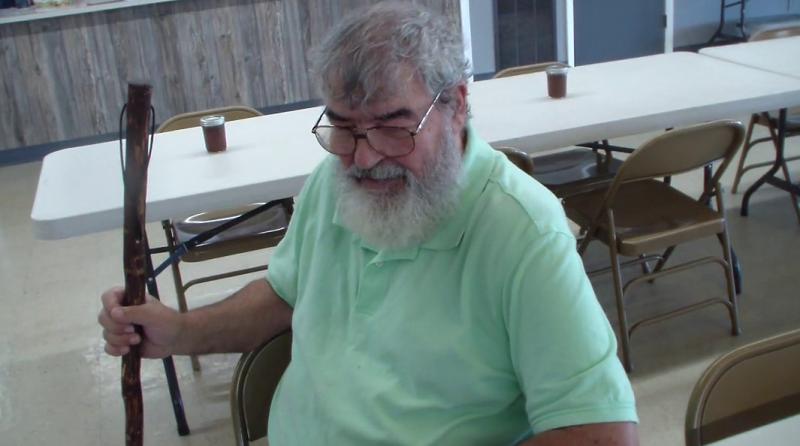
Interview with Gilbert Weaver
Franklin Wike:
Gilbert, we're going to start on your legacy aspect. I want to start talking about your father.
I would like to know his full name and if you know the date and location of the town where he was born.
Gilbert Weaver:
As far as I know, my dad was born in 1912, February the 12th of I think 1912 and he was born in Daviess County Kentucky.
Franklin Wike:
And his full name?
Gilbert Weaver:
Eugene Aloysius Weaver.
Franklin Wike:
Okay. Fantastic. Now in talking about your father, can you tell us any stories that he ever told you
about his childhood or his life and possibly about his parents?
Gilbert Weaver:
Well, yeah. He told me one time that he lived way out in the country and it was, he said him and a friend of his would like to play practical jokes all the time.
He said he threw a purse out in the back end. I don't guess there were many cars around or anything like that so he threw this purse out in the road, and a guy came up and seen the purse out in the middle of the road so he stopped his car and went out to grab the purse and they had a string on the end that pulled the purse out of the road, alright.
And one time he told me, he said that a neighbor down there had a prize watermelon that he was going to take to the State Fair, I believe. He sneaked down there one night and ate the thing. No one ever found out what he'd done.
And my dad, to my mind, my dad was my hero.
My mom died when I was real young.
She had eight kids left. Six of them at home.
What would a person, what's a normal person, what would people do today, if they had that kind of responsibility?
Dad raised us by himself alright. Not anybody else that wanted to. Neighbors down the road
would want to take me in or something like that, or watch me or something like that, or watch my sisters and my brothers. Just anybody like that. That's what kind of man he was.
Franklin Wike:
What kind of work did he do?
Gilbert Weaver:
He worked at B.E. Anderson's, worked out in shipping. That's a window and door place. He'd load a lot of trucks out. And it was hard physical work.
I went to work there one time with him, and work is pretty kind of rough. And he was doing it up to the time he retired.
Then he went back too, he worked until he was 70. And some of the stuff he'd lift was 100 pounds or better. So he was, uh, he's pretty strong for his size.
Franklin Wike:
What was his physical size? Height, weight?
Gilbert Weaver:
I'd say he's, I think he's a little shorter, shorter than me. And he was roughly about 200 pounds. I don't know, maybe about six foot something. About 200 pounds. He's a little shorter than I am.
Franklin Wike:
Did he belong to any organizations, lodges, churches, anything of that nature?
Gilbert Weaver:
Well, he belonged to St. Anthony's Catholic Church in Browns Valley in Kentucky.
And he was a strong Catholic. And, uh, he, uh, raised us up the same way.
And, uh, I wished I could think more about what I could say about him.
Franklin Wike:
Did he ever, with that many children, did he ever take time to play with the kids? Teach any of the games to the kids?
Gilbert Weaver:
Yes, 20 questions. 20 questions. You heard that before? Uh, is it vegetable, mineral, or, uh, what else is there? Oh, there's three things he had to guess. And we played that all the time. We played Monopoly. Okay. And we played cards.
Franklin Wike:
What kind of cards?
Gilbert Weaver:
Uh, Tonk, I believe. I think we played Tonk a lot.
For no money. We didn't have no money. We’d play with sticks or anything. Toothpicks.
Franklin Wike:
Did he ever talk to you about the first vehicle that he ever owned?
Gilbert Weaver:
Oh, yes. He said, uh, well, I think the first vehicle he ever had was during the depression.
And he didn't have no money to change the oil or anything. So he never changed the oil in it. When it got low he just put a little bit of oil in it.
And he kept it, he drove it, I think, all the way, all through the depression.
Franklin Wike:
Did he tell you what kind of vehicle it was?
Gilbert Weaver:
I think it's a 35 Ford. I'm not real sure. I don't know if that's what it was or not.
Franklin Wike:
You said that your mother died at a young age, when you were young. Were you old enough to
notice a change in his attitude when this happened?
Gilbert Weaver:
Yeah, uh, I was old enough, but the only time I could ever think, remember him getting a little bit upset or knowing anything, he walked into the kitchen and says, what's wrong? Mom kept this thing neat, uh, kitchen neat all the time.
And he had kids' grade education. I don't think he could ever really read. Of course, if he did, he didn't show it from us.
Franklin Wike:
Uh, did he ever remarry?
Gilbert Weaver:
Nope. And he stayed, uh, he was uh, let's see, my mom was 38, and I think he's 41, and he never did
remarry.
Franklin Wike:
Uh, did he ever talk about his parents?
Gilbert Weaver:
Oh, yeah.
Franklin Wike:
Uh, what kind of things did he tell you about his parents?
Gilbert Weaver:
Well, supposedly, he didn't know how to speak English when he went to school.
Franklin Wike:
Your dad didn't?
Gilbert Weaver:
I don't think so.
Franklin Wike:
Okay.
Gilbert Weaver:
He knew how to speak German. He had to learn English in school. Cause he spoke German, my dad, grandpa spoke German all the time. My grandma did too. I didn't know my grandma very well.
She passed away right before I was born. I don't know a whole lot about her.
Franklin Wike:
What was her name?
Gilbert Weaver:
Elizabeth, it was Elizabeth Murchler. At one time. That's what her maiden name was.
Franklin Wike:
What kind of stories did your dad tell you about his parents?
Gilbert Weaver:
Well, my, uh, my grandpa Weaver was, uh, he was a farmer. And, uh, he, uh, Well, I can’t remember, I can't remember a whole lot he said about it, but I can remember things he, uh, he, my grandpa did.
Franklin Wike:
Like what?
Gilbert Weaver:
Well, when you come, I was this little kid. We'd have this big family reunion. He'd be sitting there in a chair and he'd have his cane by it. I walked right, if you got very far distance from it, big enough, he'd grab that cane and pull it and stick the curved part out and grab your leg and pull
towards you. Come here, boy. That's what I kind of remember about him. And he, uh, I think he would walk, you know where Utica, Kentucky is?
Franklin Wike:
Yes.
Gilbert Weaver:
Uh, I think he would, and he was in his 80s. And I think he'd walk, either walk or catch a bus and go to Owensboro. He never had a license. And he'd get a shave and a haircut and get him a six pack of beer and some candy bars. And either walk or ride or how he could get back home.
Franklin Wike:
What was your grandfather's name?
Gilbert Weaver:
Uh, Martin Weaver.
Franklin Wike:
Did you ever hear any stories about why they came to America?
Gilbert Weaver:
Uh, well supposedly, they came to America to get out of the persecution that was in
Germany at the time. That's the way I understand it. And I don't know that for sure.
But that's most likely why they left Germany.
Franklin Wike:
Was your dad born in this country or in Germany?
Gilbert Weaver:
No, my dad was born in Daviess County, Kentucky.
Franklin Wike:
Did your dad ever talk about community, the feelings of the community, during World War II
when we were at war against Germany?
Gilbert Weaver:
Oh yeah, he talked about it some. He said that well, I think it was on my mom's side, my uncle Gilbert Wright, he was in the World War II. And my mom was out hanging clothes on the line
and she heard all the stuff going off for the end of the war, I think it was. And she felt like her
brother, Gilbert Wright, who I named after was coming back. Cause he was in the war.
Franklin Wike:
She did think he was going to come back?
Gilbert Weaver:
Yeah.
Franklin Wike:
And did he?
Gilbert Weaver:
Yeah, he came back. He got married. He married a GI.
Franklin Wike:
He married a WAC?
Gilbert Weaver:
Yeah. I think what it was.
Franklin Wike:
Now let's talk a little bit about your mother even though she died at an early age. What was her
physical, do you have any pictures of her at home?
Gilbert Weaver:
Yeah.
Franklin Wike:
Next time we'll have you bring those. What was her physical height, weight, color of eyes,
anything like that?
Gilbert Weaver:
I think she had hazel brown eyes. I can't remember a whole lot about her because I was only seven when she passed away and she was sick for a long time. I can remember one thing specific about her. This is honest truth. I don't know if it's just a childhood thing or not, but I was just a kid and I had to go to the bathroom. And she let me go by myself, which is a big deal. We had this big outhouse out back and all the tobacco was gone. Cut. And there's a field over the side, over to the right. Well, I'd come running out of the outhouse and come running back to the house. My mom was standing there and I looked over in that cornfield. I'll never forget to this day. I seen something
standing over there. I don't know if it's just a childhood imagination or what. It looked like a devil.
Holding a big pitch fork. Fire coming out of it. And I took off running. I ran there right into her.
And she looked at me and I said, Mom, Mom, I seen the devil. She looked down at me and said, Now if you're not a good boy, he might get you.
You know what's weird about that? That's the last thing I remember saying to her. That's weird.
And too, I remember going blackberry picking one time. And I was just a kid. I think I was like three or four or something like that. Well, I picked these blackberries. I picked a blackberry and put it in a can over there. Just one blackberry. I went on and gave it to her and she patted me on top of my head and she gave me a nickel. I said, Well, guess what? I want to get enough here and buy me some bubble gum, right? So I went on and tried to pick another blackberry and had my hand out and she says, “That one nickel's it.”
I remember that. And she wrote poetry. And she read all the time. And before she got married to my mom, my dad's going to, excuse me, before she got married to my dad, she's going to be a school teacher. And she wrote poems. And told stories.
Franklin Wike:
Do you know what the illness was that took her?
Gilbert Weaver:
Yeah, gallstones, some stones that big around. It's hard to believe, but my dad had one underneath the bed in a little box he kept all the time.
Franklin Wike:
So about five, six inches in diameter?
Gilbert Weaver:
Something like that. It's big, huge.
Franklin Wike:
Do you have, does anybody have, any of the poems that she wrote?
Gilbert Weaver:
That's what I can't, I can't find any. I'll try to find some. But I got that gift from her. I do the same thing.
Franklin Wike:
Did she ever talk about, or did you know her parents?
Gilbert Weaver:
Oh, yeah. Her parents was Bertha, I think, Bertha Wright. And her, my grandpa was Roy Wright.
Well, he died right before I was born, but my grandma Bertha Wright, when I’d get a haircut, I'd ride my bicycle up the road. And I would, she lived on this, way back off the road house. And it's supposed to be, the house she lived in was supposed to be is a ghost of Kentucky, her house was,
because it's supposed to have been haunted. And anyway, I'd go way back in there and knock on the door. She always had some apple pie or something. All the time.
Franklin Wike:
So, after your grandfather died, she stayed in the house. Any idea what year your grandfather died?
Gilbert Weaver:
1947, I think, right before I was born.
Franklin Wike:
Okay. Do you know what kind of work he did before he died?
Gilbert Weaver:
He worked in oil fields, I think.
Franklin Wike:
In oil fields?
Gilbert Weaver:
Uh-huh.
Franklin Wike:
Okay. So he would have had a social security number.
Gilbert Weaver:
Yeah.
Franklin Wike:
Um, did your, with him, and the reason I brought up he would have had a social security number
means that your grandmother would have received a social security beneficiary check at that time
in history. But it would have been small. Do you know if she supplemented her income in any way?
Gilbert Weaver:
Not that I know of. Her daughter lived with her.
Franklin Wike:
Okay.
Gilbert Weaver:
Which was a nurse at the hospital. And her daughter, Aunt Alma Montgomery, well, her daughter and she was a nurse working at the hospital. She lived to be 107 years old.
Franklin Wike:
Wow. What hospital did she work at?
Gilbert Weaver:
Daviess County.
Franklin Wike:
Okay.
Gilbert Weaver:
And she was hired in there in 1929, I believe.
Franklin Wike:
What was her name?
Gilbert Weaver:
Alma Montgomery.
Franklin Wike:
Did she ever marry?
Gilbert Weaver:
She got divorced, I don't know what happened.
Franklin Wike:
Okay.
Gilbert Weaver:
I don't know. For some reason or another, I don't know. Maybe it was for a general reason, I don't know. I don't have any idea. I never asked. It wouldn't be any of my business. That's the way I understand it.
Franklin Wike:
And as kids, we don't think about it.
Gilbert Weaver:
No, we don't. When you're a kid, the only thing you think about is hey, what's for supper? Hey, can I
go out to play? That's what I want to know.
Franklin Wike:
Speaking of supper, was there any favorite dishes that your mother used to cook?
Gilbert Weaver:
Fried chicken.
Franklin Wike:
Fried chicken?
Gilbert Weaver:
Oh, yes.
I remember eating some of it when I was a kid. Boy, it was good. Mashed potatoes, peas, gravy.
Franklin Wike:
Who took over the cooking after your mother passed?
Gilbert Weaver:
My dad. He was a good cook, too. But he couldn't fry the eggs. He'd burn them. Every year.
He tried to make eggs, and every time he'd burn them.
Franklin Wike:
You mentioned that on the outhouse, that the tobacco was cut. So you lived on a farm at that point.
Gilbert Weaver:
Uh-huh. Yeah.
Franklin Wike:
Besides tobacco, were there any other crops that your dad planted?
Gilbert Weaver:
I think he had some corn at one time, I'm not real sure. And we had a big apple orchard. And we had a hundred acres there, I think.
Franklin Wike:
Now, how many siblings do you have?
Gilbert Weaver:
I've got, well, I had seven. Three of them's passed away.
Franklin Wike:
On the ones that passed away, What are their names?
Gilbert Weaver:
Roy Weaver, that's my brother's next to me. Margie Slack. That's my oldest sister.
Franklin Wike:
How do you spell that last name?
Gilbert Weaver:
S-L-A-C-K.
Franklin Wike:
Okay.
Gilbert Weaver:
She's the one that saved my life when I was a kid.
Franklin Wike:
Okay.
Gilbert Weaver:
I was just a kid, and I think she was 13 or something like that. She wanted to get up. She wanted to hold the baby. I was the baby. She wanted to hold him. And mom kept telling her, she said, you're holding that kid to death. Don't pick him up every time he whines. Well, she heard me whine a little. And my mom looked at her. I said, don't pick him up. Well, she went over, looked in the room, and went in and grabbed me real quick and took me to my mom. I had hooping cough. And when they got ahold of me, I was black and blue. And they started pulling phlegm out of my throat. And of course, I didn't, look at me now. I don't think that hooping cough really affected me. Of course, I was, I think she kept an eye on me because I was skin and bones to about 12 years old. And I shot
up like a, I shot up and I don't think I ever quit growing. I'm 70 . . . I'll be 76 next month, this month. I don't think I ever quit growing.
Franklin Wike:
And the third sibling that passed?
Gilbert Weaver:
That was Margie. The third one was Carol P.
Franklin Wike:
Excuse me.
Gilbert Weaver:
That's my sister.
Franklin Wike:
And how do you spell her last name?
Gilbert Weaver:
P-E-A-K.
Franklin Wike:
Alright. Now, any stories of those three. Which ones have children?
Gilbert Weaver:
All of them.
Franklin Wike:
Are there any stories you can share about their actions as children that your nieces and nephews
might be interested in discovering?
Gilbert Weaver:
Well, Jeannie, the oldest, Margie's only kid, she was, she was my God child. And I would go over sometime and she would take off running in the other room. I don't know why. Cause I think she was scared of Uncle Bob, that's my nickname. I think she was scared of me till I warmed up to her. And she got married and her and her husband was in a, on a honeymoon and they had a bad wreck. And she thought she, they thought she might have to be in a wheelchair for the rest of her life, but she didn't, she broke her neck. But she seemed like, now she's just making the best of what she's got. That's all you can do in a situation like that. Make the best of what you got. And she works for a, kind of, not a homeless shelter, for an orphanage kind of deal. That's what she does now. She makes sure the kids in the orphanages get what they need. That's her job.
Franklin Wike:
Your brother that passed away, what was the interaction between you two like?
Gilbert Weaver:
Well
Franklin Wike:
Let's talk about his character and things that he did.
Gilbert Weaver:
Okay, well he was always a big cut up.
Franklin Wike:
Big what?
Gilbert Weaver:
Cut up.
Franklin Wike:
Okay.
Gilbert Weaver:
He uh, one time he took me snipe hunting. As a kid, me and the neighbor. You've heard of snipe hunting before?
Franklin Wike:
Oh yes.
Gilbert Weaver:
He told us to get these little sacks and get these little flashlights and he took us down this big yard into the field and we was down there with these flashlights going, here snipey, here snipey. And I kept thinking about all this money I was going to make off these snipes because he told me it was really worth a lot of money. But I think we kind of figured it out after a while, about an hour down there and nobody was around.
Franklin Wike:
Okay. Any other stories about him?
Gilbert Weaver:
Yeah, he uh. Oh! One year at Christmas. You know what he done? He stole stuff from everybody
in the family and gave it back to him at Christmas. He went to extra lengths to steal stuff from everybody and gave it back to him at Christmas. I wasn't married at the time and I had an old 68 Mustang GT convertible and I had a six pack of beer in the back. I never missed it. And he gave it back to me at Christmas. I said, what did you get this at? He says, in the back of your car. So I thought it would make a nice Christmas present. I remember that.
Franklin Wike:
He was a good practical joker.
Gilbert Weaver:
He was very practical joker.
Franklin Wike:
How about the personality of your sisters when they were young? When you were kids?
Gilbert Weaver:
Well, Margie was one that was always caring. She would go out of her way to make sure that everything was going okay with me or something like that. She was worried about me because I was the last one in the family to get married. And I think she was really worried that I'd be by myself for the rest of my life. But it didn't turn out that way.
Do you want to know about my other sisters?
Franklin Wike:
Yes.
Gilbert Weaver:
Well, Carol, the one that passed away. She was the baby of the family. When we was kids one time,
I can remember her. My aunt raised her up because she was 17 months old when my mom passed away. So my aunt kind of raised her and she kind of stayed with her most of the time. I can remember one time when she was home and everybody was out singing rosaries. Everybody looked around. Where's Carol at? Where's Carol at? She was about five years old. Something like that. I don't know. So I walked in the kitchen. She pulled all these pots and pans out of this Hoosier cabinet. Do you know what a Hoosier cabinet is?
Franklin Wike:
No I don’t.
Gilbert Weaver:
It's one of these old cabinets with the flour bins and sugar bowls in it. I've redone a bunch of them.
Restored them.
She pulled all the pots and pans out, opened the door, crawled in and fell asleep. And so me,
I looked and I said, well, everybody's looking for her. So I said, I've got to pick her up and get her out of there. Well, the only way I could do it was to grab her arm. I grabbed her arm and I think she started crying a little bit and I kind of pulled her into the living room and I said, here she is!
I can remember that.
Franklin Wike:
What about the . . . Tell me about your life growing up.
Gilbert Weaver:
Oh, my life? Well, uh… Okay. Well, when I was three, I got kicked in the head by a horse. I don't remember that. The only thing I can remember was the scars. That was about it. And I had hooping cough when I was six months old.
I think it was right after my mom passed away or somewhere around in there, we were out stripping tobacco, well, I wouldn't have known enough to help strip the tobacco. I just wanted to play.
So I guess there wasn't anybody watching me. I was up in the hayloft. So I started walking across the beams. I thought, well, that's fine. I'll walk across that beam. It's out there. So I'm going to walk across it. So I took off and walked across that thing and I fell. And my leg, I fell over the last tier pole (Tier poles are horizontal poles in a tobacco barn used to hang tobacco sticks) going down.
And there was all these plows and everything else right down below me. I don't know why. They grabbed me. The only thing it did was bruise my leg a little bit. And I got kind of mad because my sister came in. They put me to bed and my little baby sister came in with a pop sickle in her mouth and I didn't have one. I can remember that.
Franklin Wike:
So what kind of damage was the result of the fall?
Oh, it didn't hurt me very bad. I just had a little bruise on my leg.
Franklin Wike:
Tell me about the horse kicking.
Gilbert Weaver:
I can't remember a whole lot about it at three years old.
I remember my brother playing hide and go seek, he said. I thought that would be a good place to hide. Well, he found me when the horse took off.
Franklin Wike:
What about school?
Gilbert Weaver:
Okay, well, I thought that it was going to be fun. I really did.
Well, I went to school. I had this nun up there. You ever heard about these Catholic nuns?
Franklin Wike:
Yes.
Gilbert Weaver:
It's true. She was mean. God almighty. I have to tell you stories about that woman. She was...
I can't prove it, but actually, I don't know if I'm allowed to say what they might have accused her of doing. But I better not.
Franklin Wike:
Okay.
Gilbert Weaver:
I think it… I was five years old. I don't know what I was doing. Well, anyway, I think she must not have liked it, because she took me outside and pulled my pants down and grabbed a rose bush.
And was going to start to whip me with it. Why? I didn't know what to do. I thought she was going to kill me. I ran and screamed and started kicking and everything. And then she quit all of a sudden.
I kicked her so hard that I think she had to go to the doctor because I kicked her so hard.
That's what I can remember about my first grade teacher. And she's meaner. She didn't have no business being a teacher. Of course, back in those days, it's not like nowadays.
Franklin Wike:
Any other school stories?
Gilbert Weaver:
Oh, yeah. I wasn't very good at sports at the time. But I can remember I'd be out playing baseball
or something like that. And I would always last. Nobody wants him. He can't play baseball very good. I was out there one day and I got lucky. I think the bases were loaded and I hit that ball so far you couldn't see it. And I got… We won. I think. And I was on cloud nine the rest of the day.. I remember that.
Franklin Wike:
Okay. How about as you progressed through school?
Gilbert Weaver:
Well, I was about fifth or sixth grade. I've always been good with numbers. And I had a good nun. I had sister Charles Mary. She was super person. Real super. She took us out to, one time it was snow on the ground and she says, we don't need to go to school anymore today. She says it's snow on the ground. She says, anybody got a sled? We all went sleigh riding down the hill. You couldn't get away with that today. And everybody started throwing snowballs at her. And we had, we had a
high old time that day.
And I can remember one thing about her. We had these column of numbers to see who could add them the fastest.
Well, I always had trouble learning when I was a kid. Always.
And I remember we had these column numbers. Everybody going to see how fast we could add them up. And it came to me and I added them darn things up so fast. And she says give me that book a minute. She says, the answers is not in it. I says I know they're not in it. She says huh?
I says I can look at numbers and add them up faster. But the thing of it is we had a contest
and the smartest guy in the class and me had tried to see who got the numbers fastest.
I won. I remember it better.
Franklin Wike:
How were your parents with math?
Gilbert Weaver:
Oh, my dad was a whiz at math. A whiz.
Franklin Wike:
So you inherited the poems from your mother and the math from your dad. And that's something
a lot of people don't realize is how much our DNA contributes to who we become and what
we inherit.
Gilbert Weaver:
Well, right now, this is something about me that they're getting it together.
A lady there in Rockport knows me. And she heard one of my stories one time. She writes, she got stories published. And she's getting ready to take my stories and put them in a book and get them published. That's where I got some stuff from my mom, yes.
Franklin Wike:
You have a bicycle when you were a kid?
Gilbert Weaver:
Oh, yeah.
Franklin Wike:
Tell me about your first bicycle.
Gilbert Weaver:
Oh, my first bicycle? My brother Mike was in the Navy. He came home on leave. And he took it up this hill. The thing popped right in two. It was defective and we had to take it back.
And I found out years later my dad didn't have any money for a bicycle for me and my brother.
And my sister saved up her money and bought us a bicycle for Christmas.
Franklin Wike:
Which sister?
Gilbert Weaver:
That was Dottie. She's still here, when she's back. And she in 1976, when I think she ran that, had it all documented where she ran that many miles in that year. That's a lot of miles.
Franklin Wike:
Yes, it is.
What about your first car? Let's back up. On your bicycle, did you repair them yourself?
Gilbert Weaver:
Oh, yeah. I never took them nowhere.
I always fixed them myself.
Franklin Wike:
How did you learn to repair them? Sibling or your dad?
Gilbert Weaver:
No. I just figured out myself. I took the back wheel apart. All the guts out of the back wheel one time. And I found some grease there. And I said, well, I think the only thing wrong with this
thing, it ain't got much grease in it. So I put it back, put some grease on it, put it all back in. And it
worked.
Franklin Wike:
Let's go into your first car. Before you had a bike, you talked about horses? Did you ever ride?
Gilbert Weaver:
No, I never did.
Franklin Wike:
How about your first car? What kind was it?
Gilbert Weaver:
I think my first car I think, oh, the first car was a 55 Chevy.
Franklin Wike:
Two door or four door?
Gilbert Weaver:
Two door.
Franklin Wike:
Hard top, convertible?
Gilbert Weaver:
No, it wasn't the hard top. It's sedan, I believe. Two door sedan, yellow and white. I can remember it cause, I drove it for about a year or so. I gave $150 for it. I drove it for about a year, a couple years or so. The rod started knocking. I thought, well, this thing is just going to . . . I said, I don't want it. So I took it down to the river bottoms. And I said, I said, if this thing is gonna blow up, it's going to blow up. So I took it over there, opened it up, got up back to the bank and getting it down on the road. The thing was still bing, bing, bing, bing, bing, bing so I drove it back home and parked it.
Franklin Wike:
You know what size engine it had?
Gilbert Weaver:
It had a V6 in it, I believe.
I think it was, I'm not sure.
It was straight shift.
Franklin Wike:
On the column?
Gilbert Weaver:
Yeah.
Franklin Wike:
Okay, you're old enough. Where were you when President Kennedy, you heard he got assassinated?
Gilbert Weaver:
I was in the math class in Catholic High. And it was about 9 o'clock in the morning, I believe.
9 or 10 o'clock, I'm not sure. What time was it when he passed away? Did he get killed about 11 o'clock or so?
Franklin Wike:
I don't remember the precise time. It’s been too many years ago.
Gilbert Weaver:
I don't remember that. And it came over the radio that he got assassinated. And we all went down, everybody went down to the gym. I think we all got to go home early that day, I'm not sure.
Franklin Wike:
Any conversation around the house or school? How old were you at the time?
Gilbert Weaver:
I was 15. I don't remember, I was 15.
Franklin Wike:
So any conversations about what was happening in this country? Because that's a major deal.
Gilbert Weaver:
I can't remember what conversation about what was happening in this deal. And I thought my dad was more interested in trying to provide for us. And I'm sure there was comments made
that I can't think of any. But I then remember I had the paper route at the time. And they had an extra circulation going out. And I sat on the street corner, stood on the street corner selling newspapers. And I made something like 10 bucks selling newspapers. I thought that was a lot of money then.
Franklin Wike:
It was then.
Gilbert Weaver:
But that 10 dollars wouldn't even buy your hamburger today.
Franklin Wike:
In your home growing up, being in the rural area, was your house, did you have indoor plumbing
growing up?
Gilbert Weaver:
No.
Franklin Wike:
Okay. I talked about the outhouse, because you did talk about the outhouse. How old were you when you got indoor plumbing?
Gilbert Weaver:
We moved to this town when I was 15. And we had a bathroom in the house. Somebody told me one time, it says we didn't know what we were supposed to be washing our feet at. In the tub or in the commode? We didn't know. That was just a joke.
Franklin Wike:
I understand. Okay. Your house on the farm. Wood burning stove?
Gilbert Weaver:
Yes. Wood burning stove.
Franklin Wike:
Did you have to haul the ashes out?
Gilbert Weaver:
Oh yeah. Ashes out and everything. And I can remember one time when I was on that farm. You ever heard of Leslie Erwin?
Franklin Wike:
Yes.
Gilbert Weaver:
I was little. And at the time he was out. And I didn't want to go out and get a bucket of coal.
I was about eight, nine years old. I didn't want to go out and get a bath. They kept talking about Leslie Erwin was going to get you. And I went out and got a bucket of coal. Man, I got out there and got that bucket of coal so quick and I took off running back in the house.
Franklin Wike:
So your stove, you guys used was coal and wood?
Gilbert Weaver:
Yeah, coal and wood. And I can remember starting a fire in that wood stove as a kid. My dad showed me how to do it. He said put paper on the bottom, sticks on the top. And when it gets going a little bit, put this coal in there. And it kept us warm.
Franklin Wike:
Okay. I'm looking for firsts. I talked about the first bicycle, the first car, first kiss. Let's go with that one.
Gilbert Weaver:
Okay. I was about twelve years old and this little neighbor down the road. Something like ten
or eleven years old. And she, this neighbor down the road, I think she was trying to be an adult. She had these big high heels on. I think she might have been a year or so older than me. And I was walking down the road and she, and I looked over and there she was. She grabbed a hold of me and put one on me. I didn't know what was happening. I think I was about twelve years old.
Franklin Wike:
First dance?
Gilbert Weaver:
First dance? Well, I was in high school. No, I was in grade school and we had the polka. We did
the polkas. What do you call them? Polka? Is that called the polka or whatever it's called?
Franklin Wike:
That's what they did on Lawrence Welk all the time.
Gilbert Weaver:
Well, the grab your partner and stuff like that and swing around after that was my first dance.
Franklin Wike:
Square Dance.
Gilbert Weaver:
And this girl that I was in class with, her name was Linda Rees, I remember. And I had a crush on her. I never said two words to her. All that time. And she had to know it because people kidded me about it all the time. And I turned red in the face and I think she did, too.
Franklin Wike:
Roller skating?
Gilbert Weaver:
Oh, yes. I tried my roller skating a couple times. I wasn't very good at that. My brother was roller skating one time and I got mad at him because I couldn't roller skate. I was just a kid. So I picked up a brick bat, and I shouldn't have done it. I know it's wrong, but I picked up a brick bat and threw it at him and hit him in the head with it. Luckily it didn't hurt him.
Franklin Wike:
Which brother?
Gilbert Weaver:
Roy, one next to me. And they went in and fixed his head up and he went back to roller skating so I don't guess it hurt him very bad.
Franklin Wike:
Was roller skating on the street or in a rink?
Gilbert Weaver:
No, it was on the front porch.
Franklin Wike:
Ice skating?
Gilbert Weaver:
Ice skating, I can remember going to ice skating in PE when I went to high school. I can remember that because I was out there ice skating. It seemed like I was doing pretty good at it. I couldn't really stand up but I was doing pretty good at it. And all of a sudden I squatted down like this with them ice skates on and somebody grabbed and held my hand. I put my hands out like this and somebody grabbed and held each one of them and they took me around the rink like that.
And I never did fall.
Franklin Wike:
Okay. We're going to get into your military history later but let's start with this, were you drafted or did you enlist?
Gilbert Weaver:
I enlisted.
Franklin Wike:
You enlisted. Going into firsts, your first day at basic. Explain that one.
Gilbert Weaver:
What I get myself into. Why did I do this for? This is a whole different and other world.
I said these guys run, they yell and scream. Get in your face. I said man they scared the daylights out of me. I was just 19 years old. I was scared to death for a little while.
Franklin Wike:
You said you were the last one to get married. How about the first date with your now wife?
Gilbert Weaver:
What it was, you know when I&M power plant over here started? I don't know if you were around here then. Well when the I&M power plant started over here, I got a job in construction. I worked at
the cooling tower in Rockport from the bottom up. I was the first one there on that job.
Winter time came and it got slack. They shut it down quite a bit. I got laid off. Of course I didn't care too much. I didn't have no responsibility but myself. I was sitting down at the union hall and a business agent came out and looked at my direction. Looked at this other guy's direction. And he says you and you come here a minute. I got something for you all to do. We got a job coming up.
I want you all to go up to Olitic, Indiana. There's a training institute up there. I says, training? Well I think it's going to be a little hole in the wall thing. He says they'll pay you a stipend for going up there. You get your unemployment and you get your insurance paid in while you're up there and everything.
I said well okay. And the other guy's name was John Clark. You ever heard of John Clark? You know how crooked 37 is? Going up to Bedford. He didn't slow down. By the time I got up
to school I was like this. I come find out he rode motorcycle professionally. And he was in some
magazines. I didn't know it, but boy I got up there and I said I'm going to try to find another way back. I didn't want to drive back with him. He said he'd drive. I said man, I sure don't want to get in a car him again. He was nuts.
Franklin Wike:
So how'd you meet your wife?
Gilbert Weaver:
Well when I went up there to school, I was by myself. I was 32 at the time. And I said, yeah, I was 32. I said you know the only thing I really wanted to do, I had no intention of ever getting married. I had never been married before. I'd been engaged a couple times. But I got cold feet and everything like that.
I liked it. I liked what I call my freedom. That's what I thought was my freedom. I went up there to school and I seen this little girl, woman, a young lady, a lady over there. She was awful pretty. She had this blonde hair kind of hazel brown eyes just like my mom had. And she was sitting over there
reading a book. That's what I remembered about her. And I looked over there and she was reading
the Bible.
Well the next time I seen her, I was down in the downstairs where we got our assignments.
This girl down there had, she had her hair all stuck underneath the hard hat. And I was like, who is that? So I walked over there you know and I started playing pool. We started playing pool together.
I thought it was a guy. It was her. She told me later on she didn't want anything to do with me. She thought I was weird. But I finally ended up asking her out and we went to see The Black Hole.
Have you ever heard of The Black Hole? It's one of those sci-fi movies or whatever. We went to see that and I almost got kicked out of theater because I started laughing.
I went up there, and for some reason I just I started dating her. When I went up to school I stayed up there for about three or four months and went back to work and I started dating. We started spending a lot of time together. Well after I went back to work I said I'd drive up there on weekends.
I kept doing that and doing that and doing that and doing that. And I got out of the power plant one time and I ended up working for J.A. Jones and a guy that day told me you're going to be married in six months. I said I ain't never going to get married.
That very day, I got out of that work, I said you know what, I don't, it's three o'clock in the afternoon. I think go up to Oletic to see what Nancy's doing. I don't know why I went up. I drove all the way up there and asked her to marry me. Is that weird?
Franklin Wike:
That's life.
Gilbert Weaver:
Is that life? You never know what you're going to do. Some people plan something out like that
but I didn't plan it. I guess maybe I did and I didn't know what I was really doing. I guess I had it planned out and I didn't know what I was doing.
Franklin Wike:
You got any children?
Gilbert Weaver:
Yeah we got my oldest boy is Daniel Weaver. He's a probation officer in Louisville, Kentucky
and he's on the SWAT team.
Both my boys are Purdue graduates.
My other son works for the state.
My youngest one just got married. My oldest one is not married yet. He's 34. But he's been going with a girl for 10 years. Now he's supposedly going to get married but she went in the army
into the basic training now.
Franklin Wike:
So you don't have the grandkids yet?
Gilbert Weaver:
No grandkids.
Franklin Wike:
You'll be in for a joy.
Gilbert Weaver:
Will I be?
Look at the things they ask. Oh, my son, the little one, I'll tell you a story about him. I don't know where he got this at. I found him on the kitchen floor one day just screaming and kicking the floor. Having a fit. I walked in and said, Ben what's the problem? He said Daddy I lost my imagination.
I can't find it nowhere. He was dead seriously. He had lost his imagination.
And my oldest one, one time, Daniel, I was out weed eating the grass. And I seen a snake out there. You know little old garter snake. I called him over and said you don't have to be scared of these snakes here, I said. You know, I says, it's just old garter snake. I said it ain't going to bother you. A couple days later I was out there weed eating and I heard the screaming going on. I walked over and I said, Daniel what's the problem? That snake won't let me play with it. Oh boy, I better explain this a little bit different.
Franklin Wike:
You're, since you're still married, what do you, if you were to give advice to somebody for what makes a happy marriage, what's your explanations?
Gilbert Weaver:
Explanations? Let's see. L-O-A. Love one another, because sometimes it's not easy. That's
why the ball is down there. You know that for yourself because, I think anybody that's married
for a long time, I have been married almost 43 years. You're going to have the ups and downs.
You're going to have the arguments. That's part of life. I don't think the good Lord put two people on here and all the face of the earth that you're not going to have some kind of argument
sometime in your life. I don't think that's possible.
Franklin Wike:
What advice would you like to leave as a legacy for your children and any future grandchildren?
For their life to count for something?
Gilbert Weaver:
Do something, sometimes do something that takes a tremendous amount of courage to do, and do it.
Maybe it's something physically you have to do or something, like my dad. I imagine that took, he never had a lot of money. Can you imagine how much courage it took him to raise eight kids by himself? I says do something that you know it's going to take all the gumption you got in you and just don't give up. I says that's the best thing I can give them.
Franklin Wike:
What are your goals for your future for the time that you have left?
Gilbert Weaver:
Well I'd like to see Grand Canyon if it's possible. I'd like to go to Canada. If it's possible I'd like to get, but I can't do it because my legs won't let me. I'd like to get out and start walking and walk to Florida or something like that if I could. I think my parachuting days are over with. I used to be a paratrooper. So I said them days is over with. But I'd like to just get out and walk. If I could I'd like to take off walking. That's what I'd really like to do. I'd like to go to Canada. I'd like to do a little traveling. Which I can’t do now. But physically I have a little bit of a problem doing things.
My legs just don't want to cooperate.
Franklin Wike:
Any regrets?
Gilbert Weaver:
I guess everybody's got them. Yeah, one of the regrets, I did have I probably stayed single too long and ran away from what I call commitments. I ran away from commitments for so long. And when I got married I came home after, I came home after the honeymoon. We got back from the honeymoon. Which I think is still going on. After 40 some years. I like to think it's still going on. I guess we’re still on the honeymoon.
But anyway the first time in my life I had somebody greet me. Supper was on the table. I didn't have to fix it. The house was clean. I didn't have to fix it. She'd balance my checkbook.
I says after a while I says, I've got to scratch my head. I says what kind of fool have I been all
these years? Why didn't I do this before now? You know? And I had a future plan. We had a future planning and a family we wanted to have. But we was married eight years before that happened. Almost eight years.
I said why did I waste all that time? That's what I was really thinking. Why did I waste all that time?
© Copyright 1996-2026 U.S. Legacies and American Legacies Org, Inc.
All rights reserved. No part of this story may be reprinted without the prior consent of U. S. Legacies, American Legacies or the original author.
- Log in to post comments