
by Ursula Furi-Perry
The letter came as a surprise. It originated in Hungary, and that could only mean Mama sent it. Yet the loopy letters on the outer envelope looked nothing like her handwriting. Perplexed, I opened it---only to be confronted by a gray and grim death certificate.
She had been sick, my step-grandfather wrote. She died in her sleep, peacefully and most likely quickly. She didn't suffer any more than the usual nausea and aches that came with her kidney failure.
I thought about her life, a life that oftentimes wasn't so peaceful and easy. I thought of all the things she'd been through; all the things I probably would never fully understand.
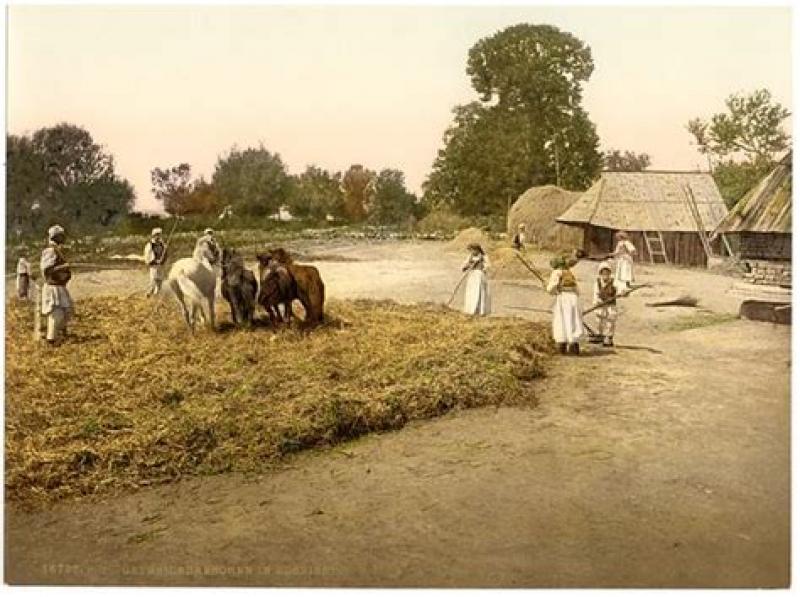
Born somewhere around 1925, in Jaszbereny, a small town, Julianna Sarkozy never had much. Life in rural Hungary was no piece of cake: it entailed long days of hard work on the fields. As a young girl in the village, Mama was in charge of cooking for the men. She would then take the food to the fields. Slim meals were not unusual. Sometimes the men ate nothing but potatoes and onions, maybe with a bit of bread on the side. The women and children would eat whatever was left over from the fields. While most families raised cattle, pigs and poultry, their meat would most likely be sold, not eaten. City folks paid good money for that food.
She must have been excited to be given in marriage to my grandfather Furi, man of the city--a good man, a family man. They moved up to the big city, where Mama had no troubles adjusting to the dynamic and fast-paced lifestyle. She even worked part-time out of her home, crafting and doing alterations for others.
My grandfather was a good man, although tough with his family. With Mama, he met his match! Like most wives in arranged marriages, Mama survived abuse and played the role of the subservient wife perfectly. She exhibited the sort of mandatory acquiescence that was expected of women in pre-war Hungary. Yet inside, she was defiant. She ran the house, and made sure everyone knew that. She was quite the matriarch, taking care of family and friends equally well.
She survived the War and its aftermath. She stood in long lines, waiting for bread, and learned how to dive when the loud sounds of bombs emerged. Mama cooked in the damp basement, desperately trying to steer her boys away from all the fighting. She kept her face covered in coal in an attempt to look older, maybe even less attractive. Rape was not uncommon during the onset of communism, and everyone always said the Red soldiers wouldn't bother any older women...
She survived communism. She watched silently as her husband was dragged off to jail for owning too much property. Years later, Mama watched as her oldest son was taken as well. He went simply for growing his hair too long, sort of "hippie style," which was considered too much trouble during those times. Mama bailed them both out. She shook her head upon seeing her grandchildren dressed in the mandatory "pionyir" uniform, yet kept her opinions to herself. This defiant woman knew when to stay quiet.
She survived her father's tragic suicide, her mother's slow death, and her husband's various heart problems. Finally, she survived my grandfather's sudden death. Seven years old, I can still see her at the funeral. She cried loudly, grasping my grandfather's coffin with all ten of her fingers until my uncles finally led her away. Death was no stranger to Mama by the time she died.
She survived multiple miscarriages, stillbirths and the deaths of two of her sons. Through the losses, she maintained her dignity and optimism. She also maintained caring for the remaining three boys, all her grandchildren and countless other kids in the neighborhood. She was a natural caretaker. Mama also knew how to discipline--and I had to learn that the hard way!
She survived tremendous change. As Budapest went through its major transformation, so did the lives of all its inhabitants. Unlike many of the older generations, Mama had no trouble adjusting to a faster, more complicated life. She dined out, visited with her girlfriends and moved freely around the city. Mama was dynamic. She was not one to stay at home and pine after the "old days." Mama had too much spunk and energy for that.
She survived loneliness. Mama managed, even after her husband died and her children went off to establish better lives for themselves. She often lamented to me about being left alone. She wished her family was a little closer. That distance had gotten unbearable as Mama became older.
She survived the break-up of her family. She listened teary-eyed as her sons condemned her for re-marrying so soon after my grandfather's death. After that day, she cried every time I phoned her. My step-grandfather was a widower also. They had many things in common. It made sense for them to share their lives together. Their relationship brought them out of a life of loneliness and gave both of them a newfound sense of companionship and happiness. Sadly, her sons did not see it that way.
How badly she must have missed her sons, I cannot even imagine. It was such an unfortunate reason to break ties with one's mother. Mama suffered like never before. This strong woman, who survived so much, never overcame the heartbreak of losing her sons' friendship. And now that she's gone, I'm so glad I stayed in her life.
I kept in touch with her until her death. She always loved to hear my voice, the one connection to her family. She treasured all the pictures I sent, from my college graduation, my wedding and my new home. Unfortunately, Mama missed all of those special occasions...dialysis just wouldn't let her go.
Mama wanted nothing more than to live long enough to see her first great-grandchild, my step-grandfather wrote. Just a few weeks after she died, my husband and I found out that we were expecting our first baby. If it's a girl, we're contemplating naming her Julianna. I know Mama will appreciate that...
NOTE: A "mandatory pionyir (or "uttoro") uniform" was something children were compelled to wear during Communist holidays and special events. It consisted of a white shirt, dark bottom and a small red handkerchief around the neck. It was used to represent conformity and uniformity in the eyes of party officials. I'll tell you, I loathed the thing with a passion!
Published U. S. Legacies
- Log in to post comments